Saturday, September 1, 2012

Muļķības par arābu valstīm labāk nerakstīt

Medijs: European Journalism Observatory EJO
Links: http://lv.ejo-online.eu/1654/etika-un-kvalitate/mulkibas-par-arabu-valstim-labak-nerakstit

Ne jau arābu valstīm vajag Latviju, mums vajag arābu valstis, tāpēc kļūdainu rakstu parādīšanās medijos varētu novest pie sadarbības pārtraukšanas, ja tos iztulkotu. To nākas  secināt pēc diskusijas „Reportēšana no arābu valstīm: Ēģiptes piemērs”, ko 23.augustā Rīkoja nevalstiskā žurnālistu organizācija FEJS Latvija.

Katarai Latviju nevajag
Savulaik presē „viena gudra eksperte rakstīja lietas par arābu pasauli un tradīcijām, kas var it kā traucēt Latvijas sadarbībai ar Kataru. Tik muļķīgi aprakstīts!” atceras Arābu kultūras centra Latvijā vadītājs Hosams Abu Meri. „Tā nedrīkst. Ja es tulkotu šādu rakstu un sūtītu to uz Kataru, rīt biznesa vairs nebūtu, jo Katarai Latviju nevajag. Latvijai vajag Kataru,” viņš uzsver ekonomisko sakaru un investīcīju svarīgo lomu, ar ko nedrīkst nerēķināties. Arābu kultūras centra vadītājs piebilst, ka ir vairāki gadījumi, kad Latvijas medijos nonākusi neprecīza informācija par arābu valstīm. Viņš uzsver, ka žurnālistam, kurš nav kompetents par šo reģionu, par to labāk nerakstīt.

Pietrūkst klātbūtnes efekta
Laikraksta Latvijas Avīze (LA) žurnālists Jānis Krēķis nenoliedz, ka, ņemot vērā ģeogrāfisko attālumu un Latvijas ārpolitiskās intereses, arābu valstis Latvijas mediju dienaskārtībā nav prioritāte. H.Abu Meri gan norāda, ka tas nav pareizi, „jo ekonomiski un politiski tas [notikumi un konflikti šajā reģionā] ietekmē visu pasauli”, tāpēc arī medijiem atbildīgi jāizvērtē ekonomiskās sadarbības nepieciešamība ar šo reģionu un sava loma šīs sadarbības veicināšanā vai graušanā.

Vienlaikus J.Krēķis nenoliedz, ka Latvijas medijiem ir diezgan lokāls raksturs, un globālais skatījums uz lietām nav tik dziļš, kā varētu vēlēties. Lielā mērā to nosaka ierastās ārzemju ziņu veidošanas rutīnas. Proti, pamatā informācija ārzemju ziņu veidošanai tiek ņemta no ziņu aģentūrām (REUTERS, AP), kā arī ārzemju medijiem (BBC). Tas neizbēgami noved pie klātbūtnes efekta trūkuma. Tai pat laikā J.Krēķis šaubās, vai žurnālistu sūtīšana uz šo valsti situāciju padarītu skaidrāku: „Ja žurnālists aizbrauks uz Kairu bez jebkādām iestrādēm, vai pievienotā vērtība būs pietiekami liela, lai bagātinātu stāstu par Kairu vai Sīriju? Es šaubos!”

Bez tam speciālkorespondenta sūtīšanai uz kādu karsto punktu ir arī  savas finansiālās konsekvences, tāpēc vietējie mediji meklē citas alternatīvas. Piemēram, LA neaprobežojoties tikai ar aģentūras ziņām. Tiek intervēti eksperti no Arābu Kultūras centra, Āzijas studiju nodaļas (piemēram, Leons Taivāns), kā arī izmantoti Ēģiptē dzīvojošo latviešu un ēģiptiešu pieredzes stāsti (intervējot pa telefonu), tāpat arī izmantotas Latvijas vēstniecības Ēģiptē konsultācijas. „Es pieļauju, ka arī Latvijā ir pietiekami daudz ekspertu par arābu jautājumiem, un Latvijas Avīze ir mēģinājusi skaidrot šo situāciju, atklājot ko vairāk par skaitļiem – cik nomira, cik uzsprāga,” uzsver J.Krēķis. H.Abu Meri par ekspertiem Latvijas medijos gan izsakās piesardzīgāk. „Ļoti švaki ar tiem ekspertiem Latvijā. Kādreiz liekas, nerunājiet par lietām, ko jūs nezināt! Tad jau labāk šādos gadījumos tiešām no Reuters rakstīt,” uzskata H.Abu Meri.

Jāmācās valoda un jāiedziļinās tajā, ko dara
Kā vienu no risinājumiem, lai ziņas par notikumiem arābu valstīs un jebkurā citā valstī vai reģionā kļūtu kvalitatīvākas, H.Abu Meri redz arābiski runājošu cilvēku piesaisti, kuri var sekot līdzi informācijai, izmantojot primāro valodu. Tas, pēc Arābu Kultūras centra vadītāja domām, dotu informācijas pieeju vietējiem avotiem un lielāku precizitāti.

Bez tam svarīgi arī, lai ārzemju korespondenti nemitīgi interesētos par ārvalstīs notiekošo, arī pirms došanās uz šīm valstīm būtu vēlams sagatavoties, lai, jau esot tur, labāk varētu izprast un skaidrot situāciju. Tam piekrīt arī J.Krēķis: „Ja cilvēks raksta par ārzemēm, viņam uz turieni ir jābraukā, jāinteresējas un jālasa informācija grāmatās, portālos un citos avotos. Turklāt, ja kādam jau ir iestrādes un kontakti, kāds tur ir bijis, tad to vajag izmantot un ar saviem stāstiem dalīties medijos.”

Thursday, August 23, 2012

Nerakstītā vienošanās


Noskanēja zvans, un viņā uzmodās ierastās tirpas. Franču valodas skolotājas Leldes Bērzas sirds sāka sisties straujāk. Kājas pašas nesās pa garajiem, tumšajiem gaiteņiem. Tās zināja virzienu: 10. B klase trešajā stāvā pašā gaiteņa galā. Vēl ātri uz tualeti. Viņa sev teica. Pēdējo reizi nopētīt sevi no galvas līdz kājām un pārliecināties, ka izskatās labi. Astē saņemtie gaišie mati, ar viegli rozā lūpu krāsu pārklātās lūpas, melnais pieguļošais tops, kas rūpīgi sabāzts zaļajos kuplajos svārkos, kuri nemaz nestiepās viņai līdz celim, melnie legingi un puszābaciņi. Meitenīgi. Tā viņa izskatījās no malas, tāpēc ne velti pārējās skolotājas tīkmsinājās, ka jauno kolēģi varētu pat sajaukt ar vidusskolnieci. Un Leldei tā patika. Viņa nemaz necentās būt pieaugusi. Jo sevišķi dienās, kad bija paredzēta stunda ar 10.B. 

Jau pirms zvana viņa divreiz bija pie sevis atkārtojusi vielu, ko stundā paredzēts mācīt: par dažādu valstu svētkiem. Gaiteņi nemaz nelikās pagarinām attālumu. Viena minūte, un viņa stāvēja pie klases durvīm vēl pat pirms otrā – tā saucamā skolotāju zvana. Mitrā plauksta spieda rokturi uz leju un piesardzīgi vēra durvis vaļā.

„Bonjour,” viņa nedaudz bailīgā balsī sveicinājās ar klasi, censdamās izklausīties pieaugusi un pārliecināta. Nobriedusi. Varbūt pat neinteresanta skolēniem. Kā jebkura cita skolotāja. It kā tā būtu parasta klase. Kārtējā klase. Kārtējie mežoņi un mīlulīši, kas te krīt uz nerviem, te liek viņai smaidīt un strādāt virsstundas un priecāties par viņu sasniegumiem, naktīm labot darbus un veidot ieskaišu lapas, darba lapas. Nē! Tā nebija parasta klase. Divpadsmit skolēni, kas kā savu otro svešvalodu bija izvēlējušies franču, iespējams, nemaz neapzinājās, ka viņu skolotājai šie nebija kārtējie virsstundu produkti. Tieši otrādi – viņa sēdēja naktīm, lai padarītu viņu stundas īpašas, lai parādītu sevi gudru un inteliģentu. Un, ja būtu jaunās dāmas varā – viņa palielinātu stundu skaitu no četrām uz vismaz sešām franču valodas nodarbībām nedēļā, lai tikai tiktu pie iespējas doties uz 10. B biežāk.

Diez vai viņš bija tādās pašās domās. Vai varbūt bija? Tieši viņa dēļ Lelde bija gatava strādāt papildu slodzi. Bruno, kas Francijā bija nodzīvojis dzīves pirmos divpadsmit gadus, patiesībā zināja svešvalodu labāk nekā viņa skolotāja – jaunā 24 gadus vecā dāma. Tikko no franču filologiem iznākusi, viņa nevarēja sacensties ar savu apdāvināto skolēnu. Vienmēr, kad viņa meklēja īsto vārdu, viņš pasteidzās pirmais, saprata viņas domu un pateica priekšā. Kad viņa nezināja kādu no vārdiņiem, ko skolēni prasīja, viņš drīzāk pataisīja klasesbiedrus par idiotiem, aizstāvot skolotāju ar „he, kas tad to nezina”. Bruno bija tas, kas lika visiem pārējiem apklust, kad skolotāja ienāca klasē. Savukārt, ja kāds uzdrošinājās stundas laikā skolotāju traucēt, lieki bļaustīties vai spēlēties ar papīra lidmašīnām, viņš bija gatavs savu klasesbiedru izdzīt ārā. Šķiet, viņš vienīgais bija pamanījis, ka skolotāja ir maiga un draudzīga. Viņa nespēja būt strikta, valdonīga un diktatoriska. Bruno to lieliski saprata. Tāpēc kā tāda nerakstīta un vārdos nepārrunāta vienošanās bija viņu sadarbība, no kuras lēnām, iespējams, izauga kas vairāk. 

„Skolotāja Lelde, vai vēlaties šokolādi?” Lelde bija iegājusi klasē un gaidīja, kad skolēni nosēdīsies savās vietās. Jau atkal Bruno viņu pārsteidza nesagatavotu. Viņš piedāvā šokolādi. Man? Turklāt viņš nosauca mani vārdā. Parasti skolēniem nerūpēja – matemātikas vai latviešu valodas učene, viņi to vienmēr sauca bezpersoniski par „skolotāju”, bet nē, viņš vēlējās būt personisks pret katru pasniedzēju. Leldi tas apbūra. Jauns 15 gadīgs čalis. Čalis? Bērns, bērns! Viņa aši strīpoja savus vārdus, likdama prātam valdīt pār jūtām. Jūtām? Ko tu runā? Kādas tev var būt jūtas? Viņa jau atkal neļāva nepareizajām domām lauzties viņas smadzenēs.
„Nē, nē, nē... paldies,” Lelde pieklājīgi atbildēja.

Taču jau atkal viņš parādīja, ka ir kas vairāk kā skolēns. Gara auguma staltais puisis ar tumšbrūnajiem matiem un dzirksteļojošajām zaļganajām acīm, kas spīdēja no melno rāmīšu brillēm, lieliski zināja, ka meitenēm garšo šokolāde, tāpēc aiz Leldes „nē” viņš saklausīja pavisam skaidru „jā”. Pārliecināts, ka netiks sodīts, staigājam pa klasi bez iemesla, viņš piecēlās no sola un gāja uz skolotājas pusi. Izņēmis no paciņas gabalu brūnā kvādrātainā kāruma, viņš to nolika uz skolotājas galdiņa.

„Lūdzu, skolotāja Lelde,” viņa tonis kā vienmēr bija pieklājīgs.

„Ak... paldies,” jaunā dāma samulsusi atbildēja. 

Ņemt šokolādi no bērna – diez vai tā bija laba prakse. Bērna, bērna, bērna! Viņa sev teica. Skaldīja. Lika iegaumēt kā reizrēķinu, kaut gan patiesībā sajutās kā lutināta sieviete, nevis cienīta skolotāja.

Lelde apbrīnoja Bruno manieres un veiklību. Cik viegli viņš bija pienācis viņai klāt un pacienājis ar šokolādi. Pat būdama pieaugusi sieviete, viņa to nespēja. Kā toreiz ar tām konfektēm, ko viņai bija atvedusi draudzene no Francijas. Viņa bija cerējusi nejauši pacienāt visu klasi, tai skaitā Bruno. Varbūt pat tikai Bruno, tāpēc noskrandušā papīrītī konfektes glabājās skolotājas penālī cerībā satikt viņu gaitenī un tā teikt palielīties, ka arī viņai Francijā ir sakari. Turklāt viņš noteikti gribētu nogaršot kaut ko, kas saistījās ar dzimto pusi – Bruno tēvs bija francūzis, māte - latviete. Taču Lelde nespēja rast sevī drosmi tā vienkārši pieet savam mīļākajam skolēnam klāt bez iemesla. Bez akadēmiska rakstura iemesla. Viņa to varēja izdarīt ar jebkuru citu skolēnu. Tikai ne Bruno. Kautrīgs smīns, atbilde uz viņa sveicienu, viegls piesarkums un straujais riksis pa gaiteni – tāda parasti bija Leldes reakcija, kad viņa skolēnu nejauši satika gaitenī. Un pat tādas reizes neatgadījās bieži. Bruno bija reti apdāvināts zēns, tāpēc viņš kļuva par ļoti aizņemtu skolēnu. Bruno, Bruno. Kur ir Bruno? Viņa vārds izskanēja vai no katras pretimnākošās skolotājas. Visas viņu meklēja. Visas viņu gribēja ievilkt projektos, konkursos, konferencēs, papildu aktivitātēs. Visas bija pamanījušas viņa intelektuālo briedumu un nevarēja pretoties viņa džentlmeniskajai laipnībai. Visas gribēja kaut kā būt saistītas as skolas labāko skolēnu.  Kā bites drūzmējās viņam apkārt, un kā bišu tēviņš viņš uz visām atstāja iespaidu ar savām zināšanām, vienmēr izpildītu mājasdarbu, labajām manierēm, piesardzīgo, pieklājīgo, samtaino un džentlmenisko toni. Taču ne visas bija tik jaunas un tikko augstskolu pabeigušas kā Lelde...

Tāpēc konfektes no Francijas – krāsainus šokolādes glazūras oļus ar mandeli iekšā - Lelde apēda pati. Vienu pēc otra viņa notiesāja 12 krāsainos oļus, izjūtot kraukšķīgo glazūru, tad šokolādi un visbeidzot kā vāvere sagrauza brūno mandeli. Viņa aplaizīja lūpas un iedomājās, kā to būtu darījis Bruno. Kaut tās būtu bijušas viņa mitrās lūpas, kas izjutušas krāsainās šokolādes un kraukšķīgo mandeļu garšu. Viņa mitrās lūpas, kuras viņš bija tik izsmalcināti aprakstījis stāstiņā par savu pirmo saksofona koncertu. Apbrīnas vērtas bija ne tikai Bruno lingvistiskās dotības, bet viņa rakstītprasme: cik personiski viņš atklāja savas bailes, jūtas, sviedrus un emocijas stāstiņos, ko franču valodas skolotāja lika mājās rakstīt. Cik brīvi un drosmīgi viņš ar tiem dalījās, spīdot ar savu burvīgo un melodisko franču valodu, sinonīniem, īpašības vārdiem, apstākļa vārdiem, kurus viņš pārvaldīja tik virtuozi kā saksofona spēli. Viņa darbi runāja par viņu kā emocionālu puisi ar juteklisku dvēseli un cieņu pret valodu. Ar tiem viņš aizien pārsteidza savu skolotāju. Lutināja un šokēja Leldi, kura parasti viņa darbus lasīja ar vārdnīcu rokās, pārbaudīdama skolotājai nezināmo vārdu nozīmes. Jā, tādu viņa darbos bija diezgan, un Lelde izmantoja izdevību no sava skolēna mācīties. 

Bruno bija īsts izaicinājums jaunajai dāmai, ko viņa uzņēma ar lielu apņēmību izglītot un pilnveidot sevi pašu, nepārstāt mācīties. Bruno dēļ viņa rada entuziasmu sēdēt naktīm un trenēt savu franču valodu, lai par spīti skolēna franciskajai izcelsmei viņa spētu jaunietim dot ko jaunu un mācīt, lai būtu viņa līmenī un lai aizvien retāk būtu situācijas, kad viņai jāsaka „es nezinu, noskaidrošu to līdz rītdienai”.

Tomēr Bruno klātbūtnē viegli nebija. Īpaši, kad skolotāja komentēja skolēnu darbus un skaidroja katra personisko sniegumu. Aši viņas svelmainie pirksti šķīra Bruno burtnīcas lapas, jaunietim stāvot blakus skolotājai un uzmanīgi klausoties. Viņš nepavisam nebija iedomīgs. Arī perfekts ne. Tieši otrādi – vērīgi uzņēma skolotājas komentārus un, iespējams, pamanīja viņas parasti bālos vaigus, kas kā pirmās vasaras zemenes bija piesūkušies ar vieglu sārtumu. 

„Te tu varētu būt bijis radošāks, taču šī daļa bija ļoti laba... ļoti laba,” viņa komentēja franciski. Vai tad tiešām nevari izdomāt sinonīmu vārdam „laba”?  Skolotāja sevi rāja, taču pēkšņi viņas franču valoda bija kā sasalis ūdens, kamēr Bruno vārdu krājumā mājoja „lielisks”, „graciozs”, „valdzinošs”, „majestātisks”, „juteklisks” un vēl un vēl, un vēl... 

***

Noskanēja zvans, un skolotāja aši uzrakstīja uz tāfeles mājasdarbu. Četrdesmit minūšu nodarbība ar 10. B beigusies. 

„Paldies par stundu,” Bruno teica, Leldei ejot ārā no klases. Kā vienmēr. Vienmēr viņš rūpējās, lai skolotāja aiziet gandarīta, laimīga un apmierināta. Tāpat kā vienmēr viņš pienesa viņai krēslu, ja tas bija aizstumts uz klases dibenu, sveicināja kaut vai desmit reižu dienā, kad satika. Saudzīgs un dvēselisks. Kā gribējās viņa dvēselei vienkārši ļauties. Pieglausties. Taču aizliegts, aizliegts, aizliegts! Lelde sev teica. Atkārtoja vairākkārt, bet domas neredzēja sarkano gaismu. Tās kā no ķēdes norāvies suns triecās pretī braucošajām mašīnām. Pretī neiespējamajam un nezināmajam. Neparastajai mīlestībai, kas vilināja, bet reizē brīdināja. 3, 5... 10 gadi... viņa galvā rēķināja. Cik ilgi jāgaida, lai tas būtu iespējams? Vai viņam tad būs draudzene? Vai es izskatīšos resna un apaļa ar miesu kā uzrūgušu mīklu? Vai viņš maz atcerēsies mani? Vai atcerēsies franču valodas skolotāju, kura franciski runāja sliktāk par viņu, bet kuru viņš skolas laikā saudzēja un cienīja? Varbūt arī viņš juta ko vairāk nekā tikai akadēmiskas attiecības? Varbūt arī viņš tai visā saskatīja brīnumu? Nerakstītu nākotnes vienošanos?

Sunday, August 19, 2012

Prāta Vētra gives another exceptional experience


Review: Prāta Vētra (Brainstorm) gig in Riga, Skonto Stadium
17.08.2012

It’s a band that doesn’t need any further explanations in their home country Latvia; a band that started in 1989 when five childhood friends formed it in their hometown Jelgava; a band that became internationally popular with the catchy and melodic My Star after performed in Eurovision Song Contest in 2000; a band that easily fills their concert venues breaking records in Latvian music scene; a band that is still active in 2012 and played their final gig of concert tour Vēl viena klusā daba (named after their latest album in Latvian) on 17th of August at Skonto football stadium in Riga. Ladies and gentlemen, Prāta Vētra or internationally known as Brainstorm once again showed that their songs – old or new – are remarkable experience when performed live and accompanied with much more than what we understand by music – visual and sound effects, flying in space, different guests to adorn the stage, surprises one after another. Yes, this is Prāta Vētra.

Vēl viena klusā daba (Another Still Life) is the band’s 12th album released in Latvian after four years gap. As always a tour is a very organic follow-up in their home country Latvia to perform the songs live. Jelgava, Ventspils, Saldus, Valmiera, Preiļi and finally Riga – those were the six venues where Prāta Vētra played this summer starting on 26th of July in their native Jelgava. Concerts for Latvian audience are very special, something that is meant for Latvians and performed in Latvian, Renārs Kaupers has said in one of the interviews. However, those are not only Latvians who have caught this feeling. It’s not the first time when Prāta Vētra gigs in their home country welcome their numerous faithful fans from Lithuania, Estonia, Norway, Finland, Poland, Germany, Russia, Czech Republic and other countries, as well as this year - international competition winners from America and Russia.

Though Prāta Vētra came on the stage at 21.30, the gates were open already from 17.30 and the visitors could enjoy the supporting acts or the ‘special guests’ as the guys from Prāta Vētra usually call them. DJ Toms Grēviņš brought us to the indie world while the local band The Sound Poets played lyrical and melodic pop-songs from their repertoire mostly in Latvian. After their emotional performance it’s half an hour left till we see the evening’s main heroes: they come on a stage as the 5 minute countdown has been passed and start with Mēles, a song from their newest album which is accompanied by fume flames suddenly appearing on the stage as if magic current conjured with the lead singer Renārs Kaupers’ hands. Already with the first assertive rhythms Prāta Vētra and Renārs Kaupers very naturally establishes the connection with the audience. The lead singer thanks for the warm welcome and wishes it to be a fantastic evening for each and every.

The following concert is divided into three parts where the first one focused on the songs from the latest album. The fresh compositions are also mixed with the songs from the previous albums thus we get to hear the energetic Kaķēns, kurš atteicās no jūras skolas (The Kitten who didn’t want to give up), as well as Bronza (They Know How to Do It Well) which is perceived with the first guests on the stage – Latvian Olympic BMX team and Māris Štrombergs who has just returned with gold from London Olympic Games. Because of the remarkable event, as well as the bronze medal that was also gained in Olympics (in beach volleyball) Renārs even fitted the lyrics of the song that mentions bronze and gold anyway so that it is ‘We have got the gold, and also bronze’ (‘Mums tak ir zelts un arī bronza’). 

In the first part of the concert the band keeps on mixing old and new songs, fast and slower ones, such as Šonakt neguļ tik daudzi (So Low Lullaby), Ja tikai uz mani tu paskatītos (Your Call), Ko tu vēl domā?(Don’t You Get It), Lapsa (When Nightlife Covers the Daylight), as well as two songs in Russian – Skoļskije Uļici and Na Zare. That ends with band members leaving the stage and keeping the audience puzzled while offering them to watch a short movie about Prāta Vētra members flying in the space. Dressed as astronauts they get into a spacecraft and fly up there into the unknown and mysterious. The audience patiently follows their restricted moves (as being in the space) at the time enjoying the funny and amusing movie they have made, and soon the spaceship is back with Prāta Vētra musicians in the same white spacemen costumes coming on a stage as the first single Lantern from the new album is being performed. They come in two teams – from the right and left side of the moving stage – slowly forming another, a smaller stage in the very front side of the initial stage they performed before. And yet again the band succeeds to surprise the audience with their creativity that makes their shows more than just musical experiences.

That is when the second called 'White sensation' part starts when the band welcomes yet another guest on the stage. It’s the popular hip-hop musician Gustavo who has contributed to the band’s previous album Tur kaut kam ir jābūt (Years and Seconds) released in 2008. Together they perform the title song of this album mixed with Gustavo’s own song Dziesma manai pilsētai (Song for my City) from the album Pilsētas portāls (The City Portal) dedicated to the city of Riga. After that this part of the concert flows into a very playful mood blending the well-known hits into one unique composition. It starts with Online, followed by Ziema (Winter) and Plaukstas lieluma pavasaris (A Day Before Tomorrow). As they perform parts of these songs, they also intertwine some well-known housemusic rhythms. The stage turns into one great dance party as there are more spacecraft members in white costumes who have joined on the right and left sides of the stage forming a sort of triangle with Prāta Vētra guys in the very edge of it being DJs for their own songs. They perform one more song – Violet – from the last album and disappear in the backstage again along with their spaceship ‘team’ that consists of around 15 dancers in astronaut costumes. 

One more? Really? Maybe two more? The message appears on the big screens of the stage sent from the backstage as if the band would be chatting with the audience. The answer is pretty clear – the crowd demands for more songs, and Prāta Vētra guys are back again. Back from the space. Back from the backstage. Back with new outfits and a set-list to start the third part of the show – the golden hits that they have reserved for the very end. Thus we hear Lec (Try) and Rudens (Lonely Feeling). Moreover, Renārs reveals that there has been all Latvia voting for the favorite Prāta Vētra song, and according to the votes we get to know that there is a song which is most awaited to be played and can be considered as favourite for Latvians. It is Spogulīt, spogulīt (Hide on the Moon) with the lyrics of Brother Grimm’s fairytale Snow-white. The ballad is traditionally performed by Jānis Jubalts, the guitarist of the band as it’s also his favourite song. Spogulīt, spogulīt is an exception only for the citizens of Valmiera (a city in Latvia) who had a different choice for their favorite song. It’s another ballad type of song and moreover, it’s a song that has been used in the presentation video clip of Latvia. The Latvian version of the song is called Tu izvēlējies palikt while the English one is Welcome to My Country. After the favorite songs have been played, the concert goes on with Četri krasti (Four Shores) followed by a very nostalgic atmosphere with Īssavienojums or in English My Star, probably the best known song abroad. 

The concert doesn’t seem to want the ending. Some more songs follow as supposedly the last ones, but neither – the band or the audience – seem to actually say goodbye. Renārs introduces the band members and thanks to all the guests who took part in the show. The beloved Latvian musicians traditionally bow to their audience. ‘Shall we fly?’ We suddenly hear a proposal from Renārs, and Lidmašīnas (Airplanes), the hit from the old Prāta Vētra, is on the air setting yet again cheerful and playful mood. The band receives a few paper airplanes on the stage thrown from the audience, and after one of their greatest hits has been performed, they leave the stage. It has been a splendid show of 2,5 hours, an exceptional one, well carried out, prepared and performed. The band has said ‘bye’ to their local friends and fans, but not yet to their international audience. Prāta Vētra is on the way to Russia and foreign crowds elsewhere in the world as the international release of their latest album is going to follow soon.

Monday, July 30, 2012

Bike Rides: Love at First Sight


Hyderabad
‘Never ever do it again! Never, get on somebody’s bike just like you did now! This was an exception. I got you safely back home since it was dark, but that’s because I am a good person, I work in England, so I know how foreigners feel when they need help. But keep in mind that other Indians might not be like that.” I am being seriously warned by a mysterious motorbike rider as I reach my home on his bike at around 8pm in the evening. Dark as night are his clothes and the massive helmet making him look like a black knight. When he talks to me, it’s rather his worrying but friendly eyes than his voice pent in his helmet and sounding raspy and rough. Indeed, my saviour wanted to be strict and serious about the matter contrary to the young, frivolous and excited girl pretending to be listening carefully while actually … she had just fell in love with the bike rides. 

He himself thought he can be justified. He found me roaming in the streets without any clue about directions somewhere in Lakdikapool area. It was slowly getting dark and I was still a newcomer in the town; perfect match to get lost and be found again. 

The Black Knight:  Excuse me, where are you going? 
Me (finally there’s someone to help me): To SPAR supermarket.
The Black Knight: SPAR supermarket? This is the wrong way.  
Me (I knew I would never find it myself): Oh really? No wonder, this is my first time to try to find it alone. 
The Black Knight: Do you specifically need SPAR supermarket or any supermarket would do? 
Me: Any supermarket. (Yes, yes, please take me there! All I need now is a supermarket before it gets darker.)
The Black Knight (pondering): Well, then come on my bike, I will take you to one supermarket nearby.
Me (pretending to be careful and thinking): OK. (I knew this would happen in the best scenario.)

Perhaps, many people would have refused getting on a stranger’s bike, but somehow I had a feeling that my so called knight is a good person. Besides, motorbikes (or as Indians call ‘bikes’) are one of the most common and convenient means of transportation in Hyderabad, and needless to say, it was lust urging me to try it for the very first time.  Well, nobody told me that the first time would come in the seemingly most unexpected moment as I was wearing skirt, hurrying to do my shopping and letting it become darker as my sense for directions became vaguer. However, maybe this was exactly what was needed to make this bike ride so magical and romantic. Therefore, I didn't hesitate a second: immediately got on, arranged my skirt so that it covers my knees (though who cares about it anyway), cramped my hands in the handles on the back of the bike and here I was. Ready to go! Going! Floating in the breeze and feeling my hair dancing on my back and forehead, my skirt happily fluttering in the air and my soul singing. It was love at first sight undoubtedly as I even forgot what I needed from the supermarket. However, as promised my knight got me there and I randomly bought some food items already thinking about the way back home. Yes, yes, again on his bike! 

After having dropped me home, he said that one sentence which I never wanted to hear as I was irretrievably in love with… with bike rides. ‘Don’t ever get on a stranger’s bike? Don’t ever ride anybody’s bike! It’s dangerous and you might fall down!” I reluctantly promised I would follow that, but secretly knew he is not going to succeed intimidating me. I liked that ride! And I am going to try it again once I get a chance. 

I got it already the next day when I and my Mexican friend appeared to be lost at night in the centre of Hyderabad. There were some random guys offering us a lift back home and here we go – getting on a bike again!

Actually, it’s pretty common for women and even for children to use bike as a means of transportation. Moreover, the bikes can serve for different purposes, for example, there are family bikes with 3 or 4 places. Of course, everything has its downsides, and the green activists would never support the motorbike dominance in the city. Well, Indians don’t seem to bother about it.

Auto – rickshaw
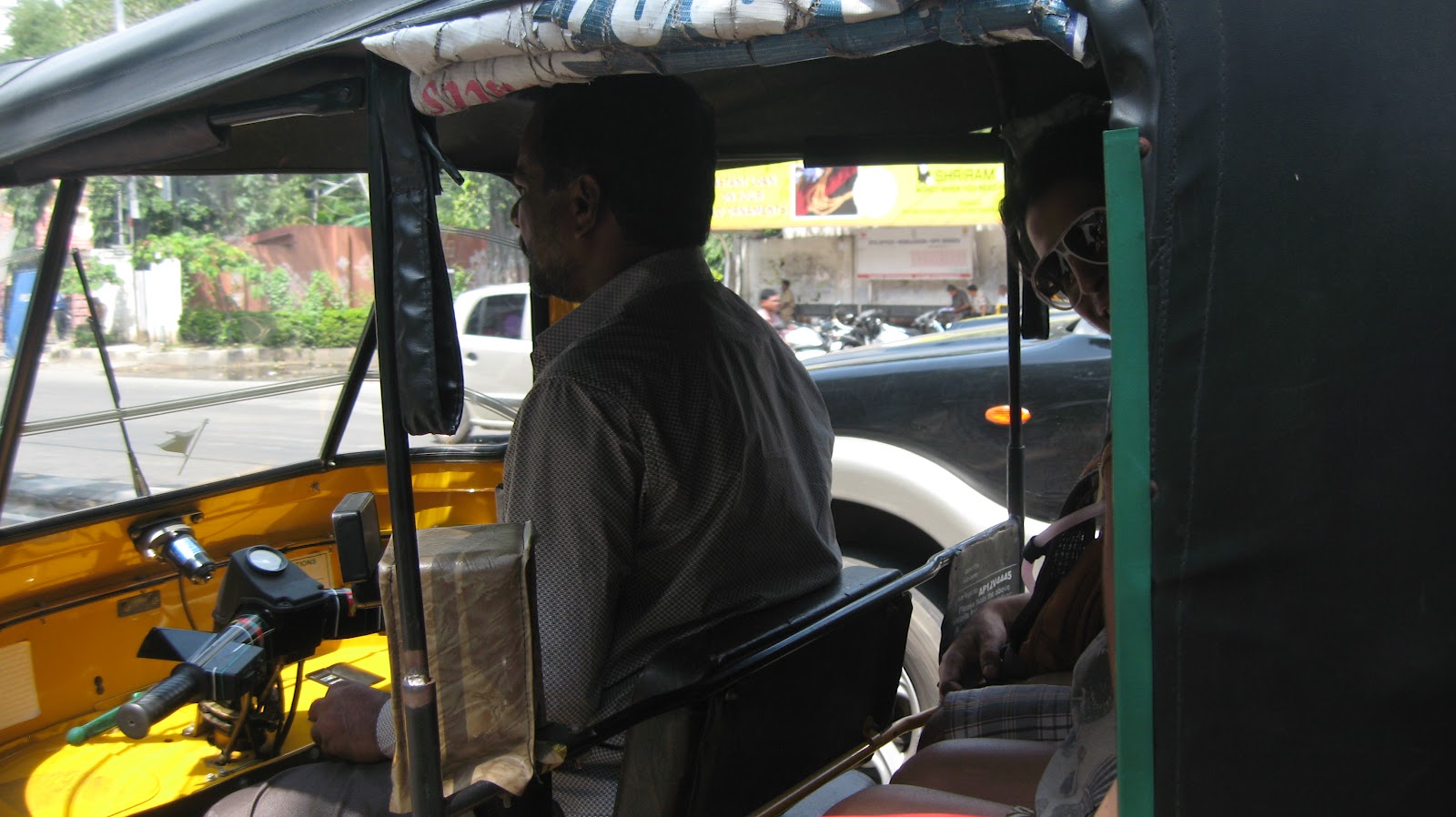
Auto driver in Hyderabad
If you don’t have your own bike, you would often commute from place to place by rickshaw or auto (as the locals call it). It’s like a taxi: you tell where you need to go and the driver will get you there. Sounds easy? It is… and it’s not!!! You may face problems here as well. First, you need to agree on the price and most probably the auto driver would want to charge you more (as from a foreigner) or refuse using the meter. Secondly, you have to be ready that the driver would not always know the address precisely, so he might know only the area and then spend time (waste your precious time) looking around and asking to others while you are getting annoyed. However, sometimes the drivers are just amiable chaps who even try talking to you and ask some questions about India and/or your country. Not always they would speak perfect English as these kinds of jobs are done by lower class people, but mostly you can find a way to communicate. This was the transportation I used most often when I had to go somewhere in the city and to be honest – I already miss it.

Cycle 
A street in Panaji (Goa).
What I experienced in Delhi (not that much in Hyderabad) was a kind of vehicle we use in Riga for entertaining tourists. Yes, so called cycles might also be used to get around. That way the driver is economic as he doesn’t use petrol, and “green” to the city. Well, he needs to put more efforts though.


Public bus
In a bus in Bangalore
Public buses are pretty organized. At least they have numbers, and if I am right, they run according to a certain timetable. This was not the case in Egypt for example, where you need to stop the bus by showing signs with your hand(s) and there are definitely no timetables (to most of the buses), and people are sometimes running in crowds and struggling to get in. Compared to that, congrats for India, it was pretty much ok! What I found funny in the bus was the way it was divided into male and female seats. Well, if you look deeper in Indian culture, this is just a normal thing as this is the way everything seems to work. They do have women rights, but for sure, it’s something different to what we (Europeans) understand by it. It’s more like segmentation into two genders. Well, I guess that’s a story for another post. In fact, I didn’t need to take public bus that often as I mostly used auto or my school bus. 

(Jump off a) Train 
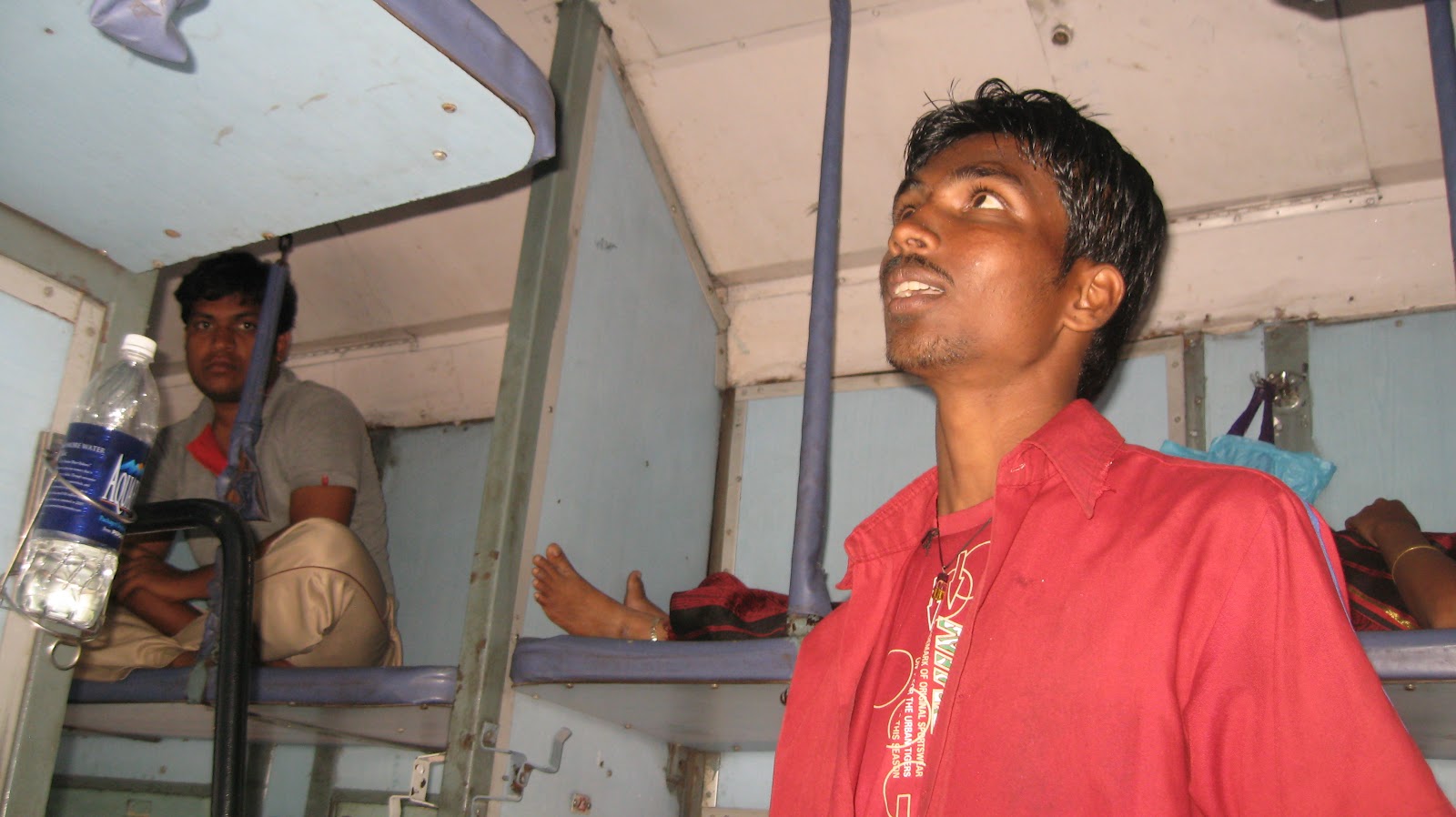
Train Bangalore - Hyderabad
“Are they really standing out of the train while it’s still running?” I was asked after coming back from India. This seems to be a scene many have seen on TV and wondered how it’s possible. Yes, it is possible! Trains might move slowly especially when approaching the next station, and there are even people who jump out of the train when their stop comes as the train doesn’t stop completely but only reduces its speed. Yes, it happens. Otherwise, trains are very common and CHEAP to use if you want to commute between the cities. It takes time, but if you have secured a sleeping place in a sleeper class, it’s usually a convenient way to spend a night. You wake up and you have reached a new city. However, the trains might not always be that clean and hygienic (especially the toilets). Moreover, don’t be surprised to share your bed with cockroaches or see some random rats passing by. Also, be aware of pickpockets! Especially during night it’s better to keep your precious stuff with you so that you can have a control over it. In general, trains are very lively means of transportation and if you go for a train, you go for Indian culture and adventure. It's always interesting to observe the train vendors selling snacks, water bottles, chai (tea), coffee, Masala dosa (Indian spice delicacy) and pronouncing it with their special Indian accent. That is something to discover on your own skin until you get annoyed by that: always loud voices never giving you time for a peaceful nap but always making sure you have something to eat and drink. 
A train vendor.

A train vendor.


Sunday, July 29, 2012

Pieredzes vēstījums par Ēģipti internetā

Esmu sākusi publicēt uz reāliem notikumiem balstītu pieredzes vēstījumu par Ēģipti interneta vietnē

http://tristasesegiptes.lv/

I have started publishing a semi-fictional novel about Egypt in Latvian. Go to http://tristasesegiptes.lv/ to find out more about it.


Tuesday, July 24, 2012

Damien Rice's modesty and emotions

Positivus 2012
Salacgrīva, Latvia
June 21st 
Photo by Margarita Ogoļceva

The fact that Damien Rice’s performance has been long awaited is shown by the tightly compressed crowd shortly before his show as there seems to be no free place left and for sure, no chance to take the front row. No wonder, his concerts in America and Europe have been sold out. The Irish folk-musician who is not giving live performances that often is thus exceptionally welcomed on Positivus stage with his first ever concert in Latvia.  

No posh introductions and backgrounds, no luxury, it’s just Damien Rice with his guitar arriving on a stage in his humbleness and starting on with the first song The Professor. It’s followed by Delicate, Volcano, Elephant, Cannonball, Fool almost without any breaks between the songs except for Damien’s thankful smile from time to time. One song ends and the next one starts as if telling a story where each song would be a chapter that naturally leads to some continuation. 

For a moment, it feels this could happen anywhere; be it a large, crowded festival or an intimate evening among friends. The setting doesn’t matter as long as it’s Damien Rice who is unique, genuine and authentic making the atmosphere so special. He hardly speaks a word on a stage leaving an impression that he has the secondary role while his songs live their separate distinct life. It’s just like he has said in one of the interviews comparing his as creator’s role to the situation of parents when they have children. He is transmitting his music to others. His music that cries, laughs, screams, yells, feels. That all performed and felt by Damien Rice with his emotions for loneliness, sorrow, anger, love. 

Song by song we get to hear Cold Water, Hallelujah, I remember, Woman Like A Man and then it’s time to ‘close the curtains’ with The Blower’s Daughter. The last song is perceived with exaltation and cheering from the audience. The evening is over. Everyone is clapping hands and smiling including Damien Rice himself as if thanking to his own creativity and his songs that have made the evening unforgettable and immensely emotional.

Manic Street Preachers happy to be back

Positivus 2012
Salacgrīva, Latvia
June 21st 
Photo by Margarita Ogoļceva

It was four years back when Manic Street Preachers played on Positivus stage for their first time. Now the famous Welsh rock band can recall the venue very well and though their role is similar – the last headliners on the main stage on the second day of the festival – this time the crowd is much bigger, and agreeing with bassist Nicholas Allen Jones ‘it [the show] is gonna be better’.

It starts on this beautifully decorated stage with glittering pink cherry trees like at Japanese cherry blossom season and a picture of a blond girl with a crown on her head gazing at the audience from the back of the stage when the band suddenly appears, and the lead guitarist James Dean Bradfield vigorously announces the first song. It is Motorcycle Emptiness from Manics first album Generation Terrorists that immediately moves the audience followed by Your Love Alone Is Not Enough and Ocean Spray altogether ensuring a very powerful beginning. ‘It was easy to come back,’ confirms the lead singer.

The band continues with (It’s not War) Just the End of Love and The Everlasting where everyone joins in the catchy and nostalgic part In the beginning/ When we were winning, and the band goes on with Everything Must Go and Found That Soul. Then James Bradfield announces an old song written in 70s, and it is Suicide Is Painless. After that we hear You Stole The Sun From My Heart and Revol from The Holy Bible remembering and honouring Richey Edwards for the remarkable lyrics he has left behind. You Love Us comes next followed by The Masses Against The Classes, another socially meaningful piece.

Towards the end of the show we hear A Design For Life and Tsunami, and after exclusive introductions of every band member the very last song is announced. If You Tolerate This Your Children Will Be Next is performed by Manics and accompanied by everyone else in the crowd singing along. What an emotionally uplifting ending with youngs and olds coming together and Manics genuinely enjoying themselves having played another great show at Positivus!